Ten Years as a Designer
a few reflections on the tenth anniversary of my graduation
I really can’t overstate how much I love milestones. I mark the changing of the seasons, the ending of each year, and just about every other way I can manage to note the passage of time. And this week is a fun one: a decade since I graduated from the Fay Jones School of Architecture & Design!
I don’t miss design school. It was four years pushing a boulder up a mountain: at the mercy of subjective grading scales while clinging to an academic scholarship; dropping literature classes I desperately wanted to take because design studio was so all-consuming; receiving A’s and B’s but feeling like I could never quite perform what was expected of me. I have never in my life felt less capable.
And yet it always seemed like it was where I was meant to be. A designer is who I’m meant to be; I have a hard time imagining myself as anything — anyone — else. I lead with it as a descriptor, and have found bits of designer-thinking in every aspect of my life.
Design school did not reward my practicality and earnestness, but design practice consistently has.
It’s hard to overstate how much architecture school shifts the way you see the world. There’s a different kind of attunement to the built environment, a sensitivity to light, sound, the tactile experience. A third eye opens, and it is trained not just on proportion and color but on building system integration and material detailing. Completing a design program is gaining fluency in a new language.
You come out of school a little judgy: emerging from years of analysis and critique ready to turn your newfound skills on the built world around you, and oh how that world deserves judgement.
But the humbling is quick.
I tell every intern and new hire who crosses my path that they should expect the learning curve of the first three years out of school to look more like a vertical line, because practice looks almost nothing like school did, and it turns out you know nothing. (Presumably, many careers are like this; I wouldn’t know.)
But strangely, this is the part where I found my footing, because interior design is a good career for someone hungry for knowledge and not afraid to ask questions; for someone who is always watching people; for someone with a weirdly good memory for finishes, fixtures, furniture; for someone who wants to make everything they touch just a little bit better. Design school did not reward my practicality and earnestness, but design practice consistently has.
In design school, clients are theoretical and budgets are nonexistent. (A lovely fantasy, I wish I had appreciated that more.) In practice, those two things govern our world. I find this makes me gentler when I critique spaces: sometimes if I squint, I can see the careful pruning, and beyond it I can imagine what the space might have been. If only, if only. This whole job is killing our darlings.
There’s a perpetual tension between my anxiety that each project will reveal that I’ve no idea what I’m doing and the certainty that I’m only getting better.
When people ask why I became a designer, I often tell them it’s because I love large-scale problem solving, and this is true! But when I tunnel down into why I’ve stuck with it as so many of my peers made career changes, the real reason I love being an interior designer is because I’m addicted to shaping the physical world.
In college, a friend getting a business degree noted in passing that she was a little jealous that I had something to show for all my semesters of work. She loved her classes, but she had a bunch of papers while I had physical proof that I’d been working: renderings, color studies, hand-drafted plans, big rolls of drawings, hand-built models of spaces and furniture designs.
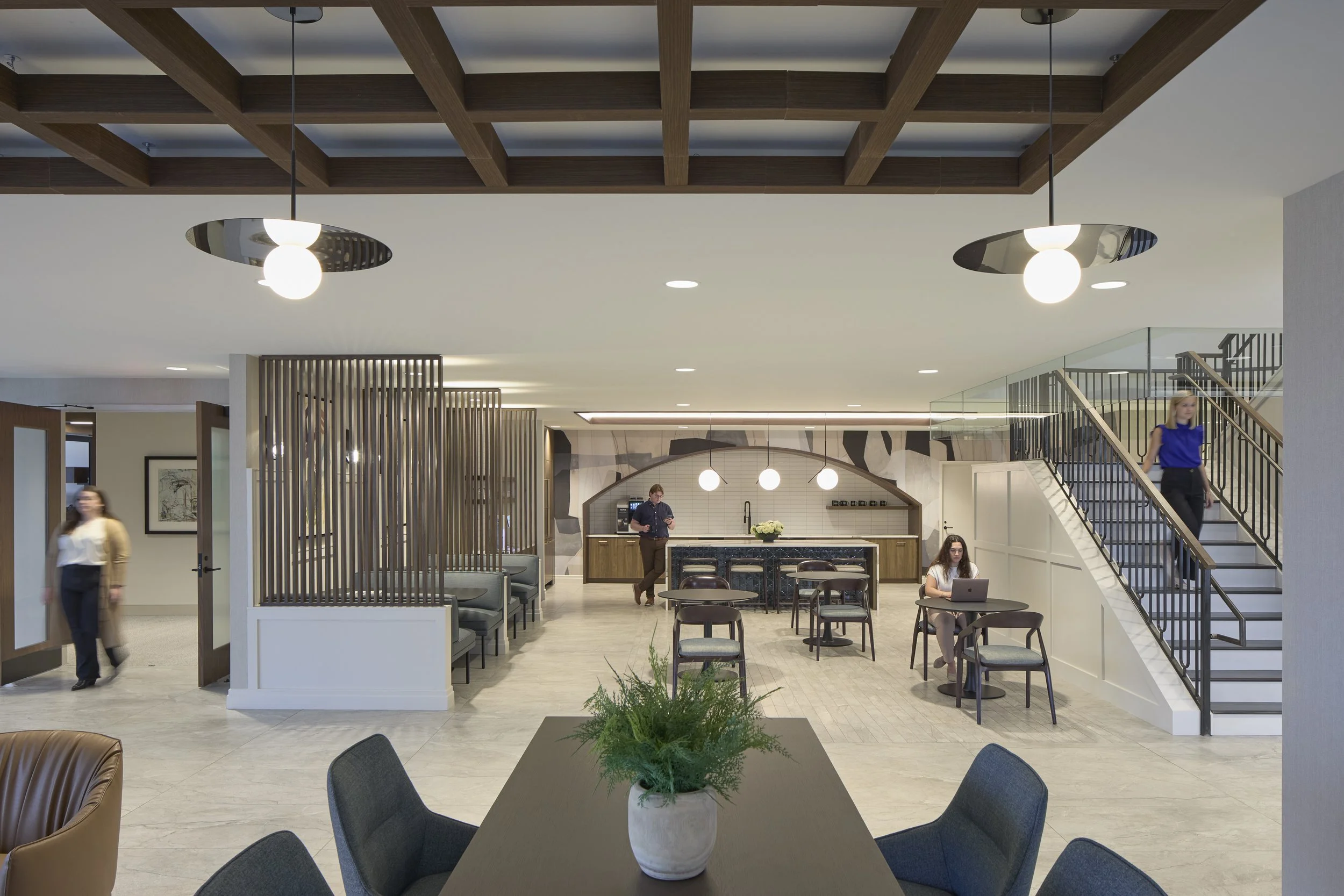
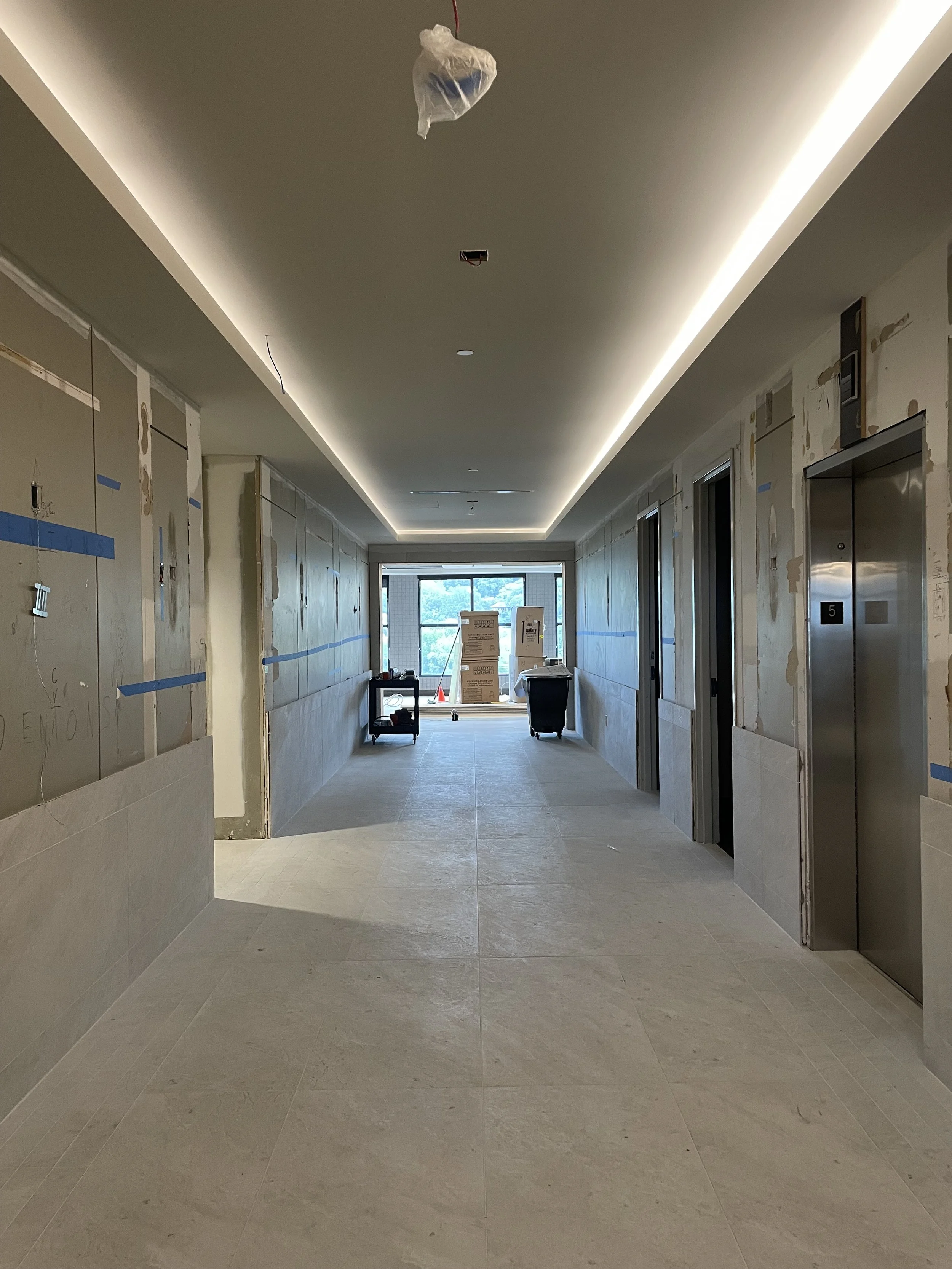
I’ve occasionally thought about that conversation when I’m on a job site, because I can never properly describe the feeling of seeing something I designed come into existence.
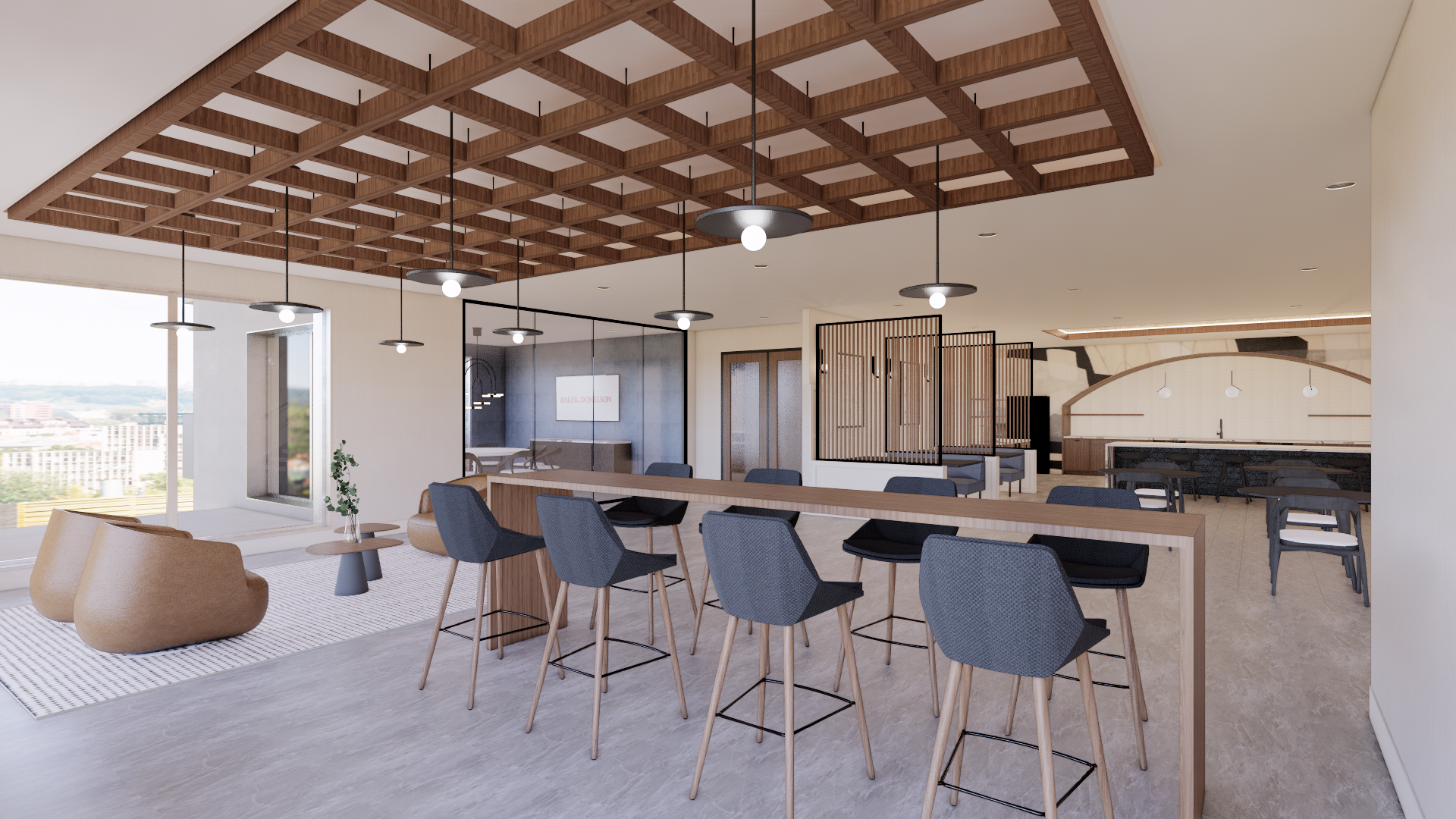
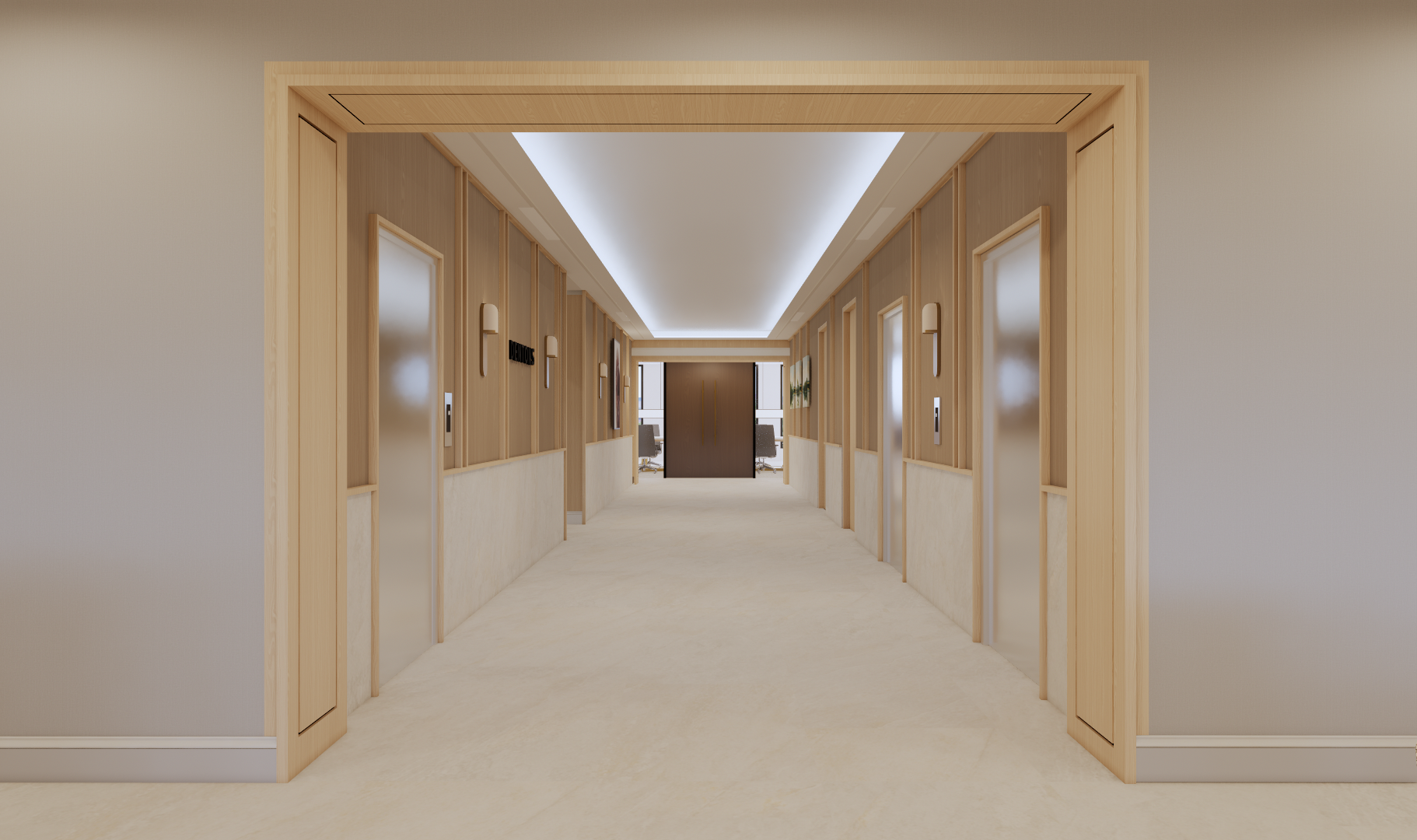
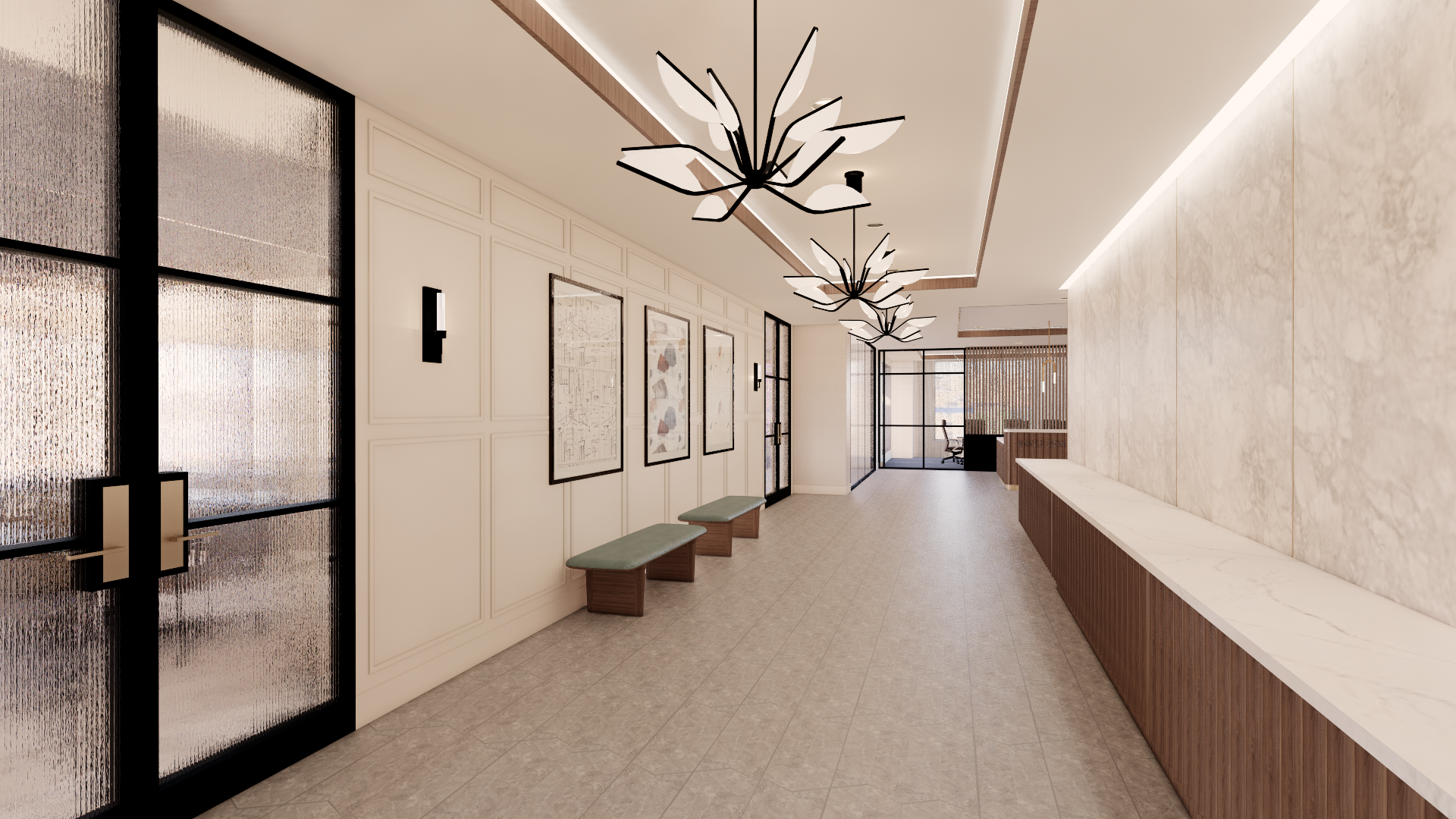
The design process is mysterious, even when you’re in it: there is an alchemy afoot, an unpredictable reaction between client, budget, existing conditions, a variety of other constraints, and the design team. Through months or years, we work our way from an idea of what this space will be into a plan for how to achieve that. We move from a list of goals to a floor plan to a black-and-white sketch to a few applied finishes and lighting strategies to a fully fleshed-out idea to construction drawings.
Then we wait.
Contractors price it. They figure out how to build it. They ask questions and submit shop drawings. Dozens or hundreds of trade workers move into and through the space. It’s a real symphony when it goes well; the workers seem mostly indifferent, but I am always a little touched by the best ones. I want to stop and thank them for their part in the group effort of creation.
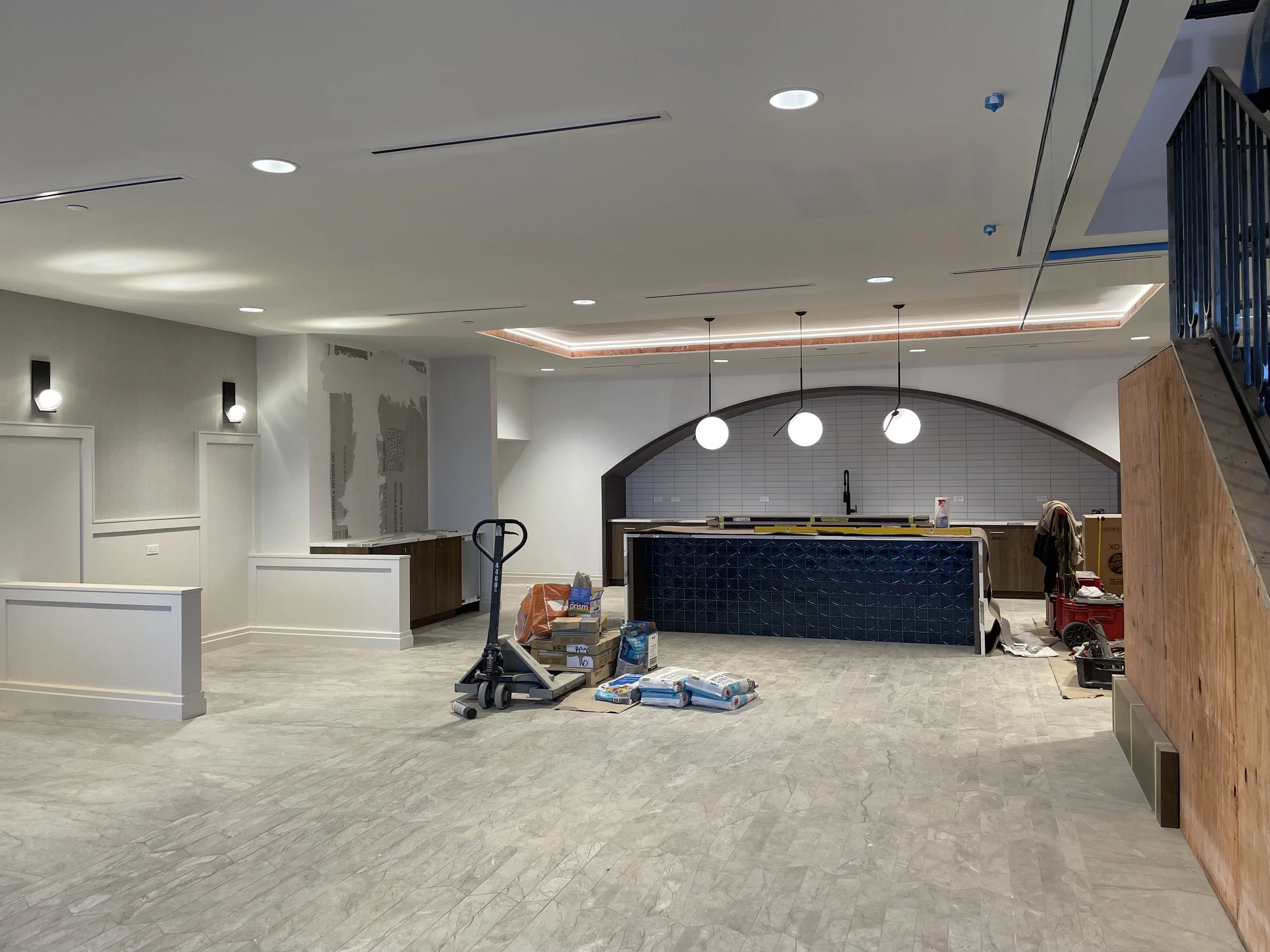
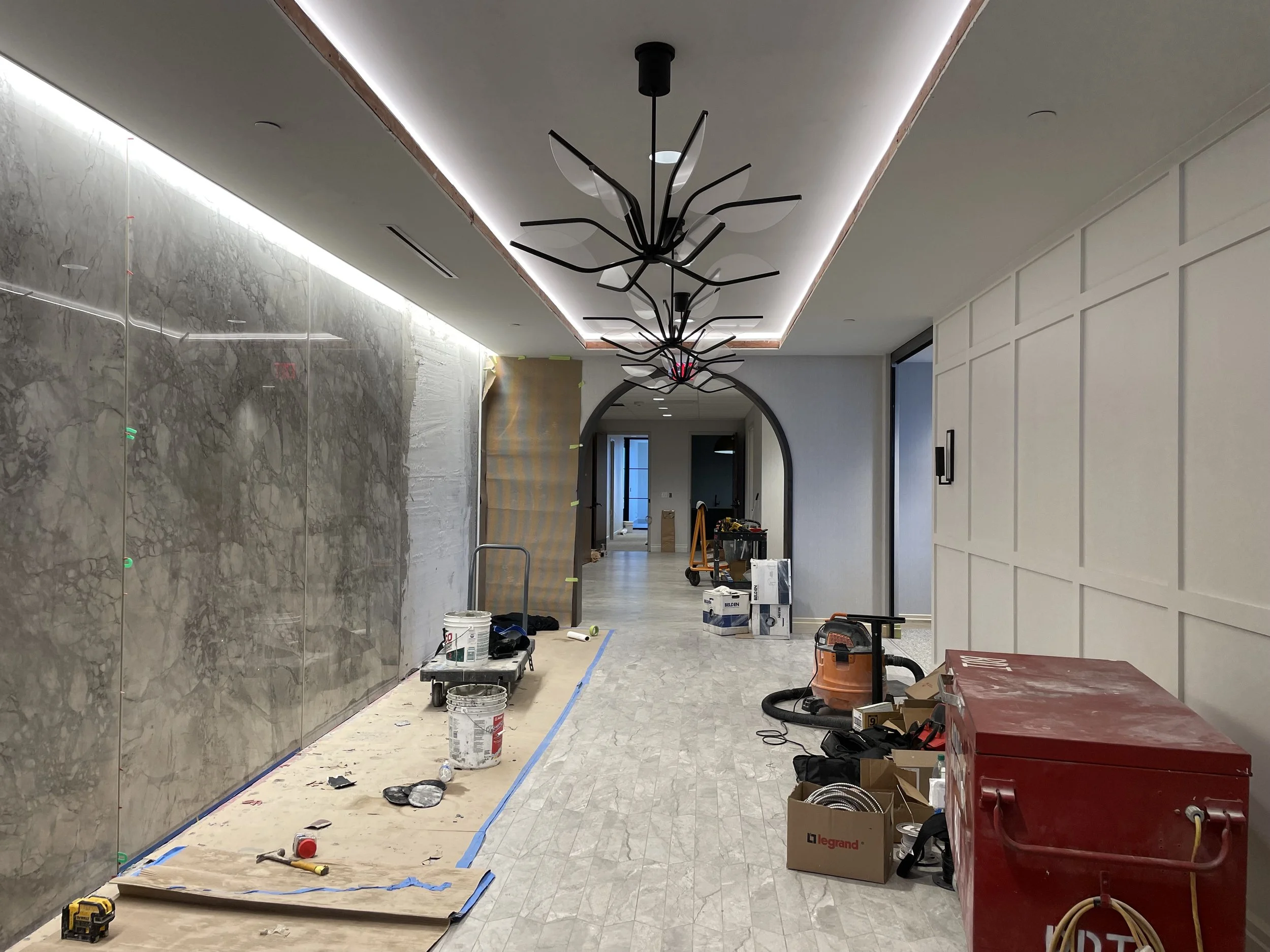
During this phase, we (the design team) answer questions, review the shop drawings, double and triple check everything we thought we’d already figured out. Problems arise, and we all solve them together. We walk the site regularly: making sure electrical boxes are where they should be, that a fire strobe hasn’t been placed on a wall where we intended art to go, that the contractor understands the intended relationship between those two ceiling features, etc. It’s all wildly unglamorous. More paperwork than you’d believe.
Eventually, slowly, it comes into focus. The walls are framed, and we finally get to feel the size of the rooms, walk the floor plan we’ve been looking at for so long. Some weeks or months later, finishes begin appearing, and everyone gets to see big expanses of the tiny samples we’ve been passing around all this time. There’s a perpetual tension between my anxiety that each project will reveal that I’ve no idea what I’m doing and the certainty that I’m only getting better.
It always feels astonishing. This thing I imagined up appears before me, slowly and then all at once. It’s a type of magic that never loses its power over me, an antidote to any cynicism that may have crept in during the process.
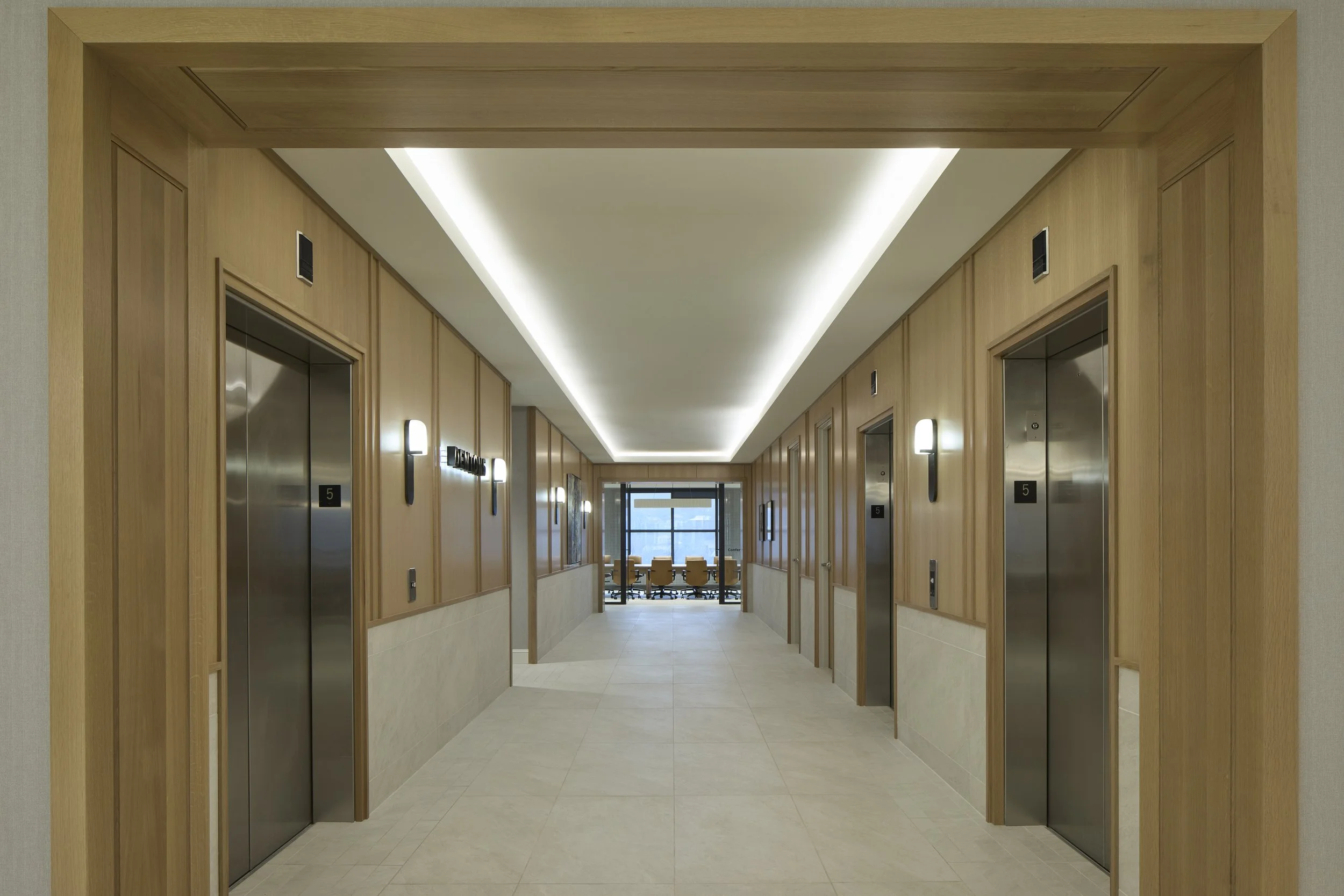
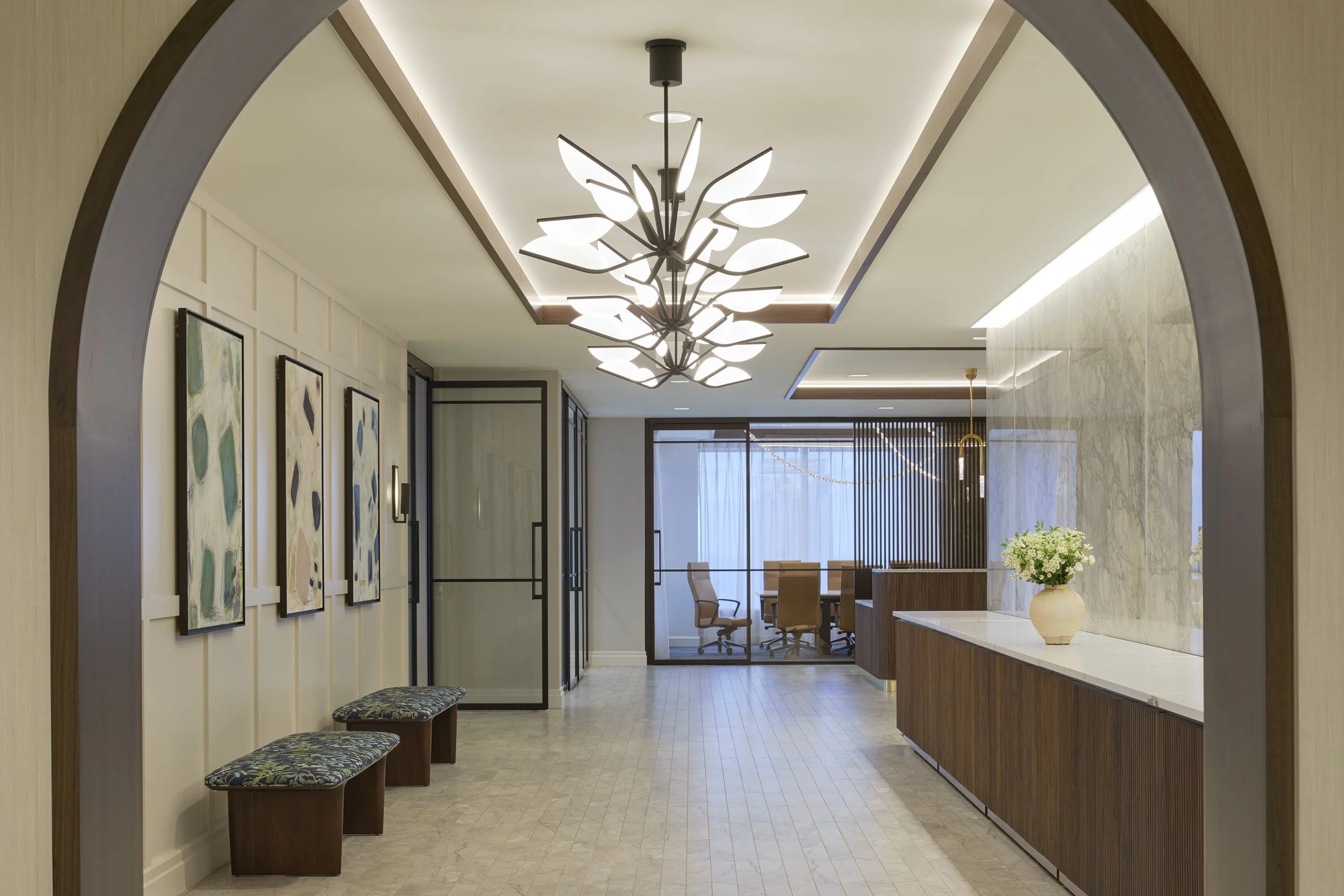
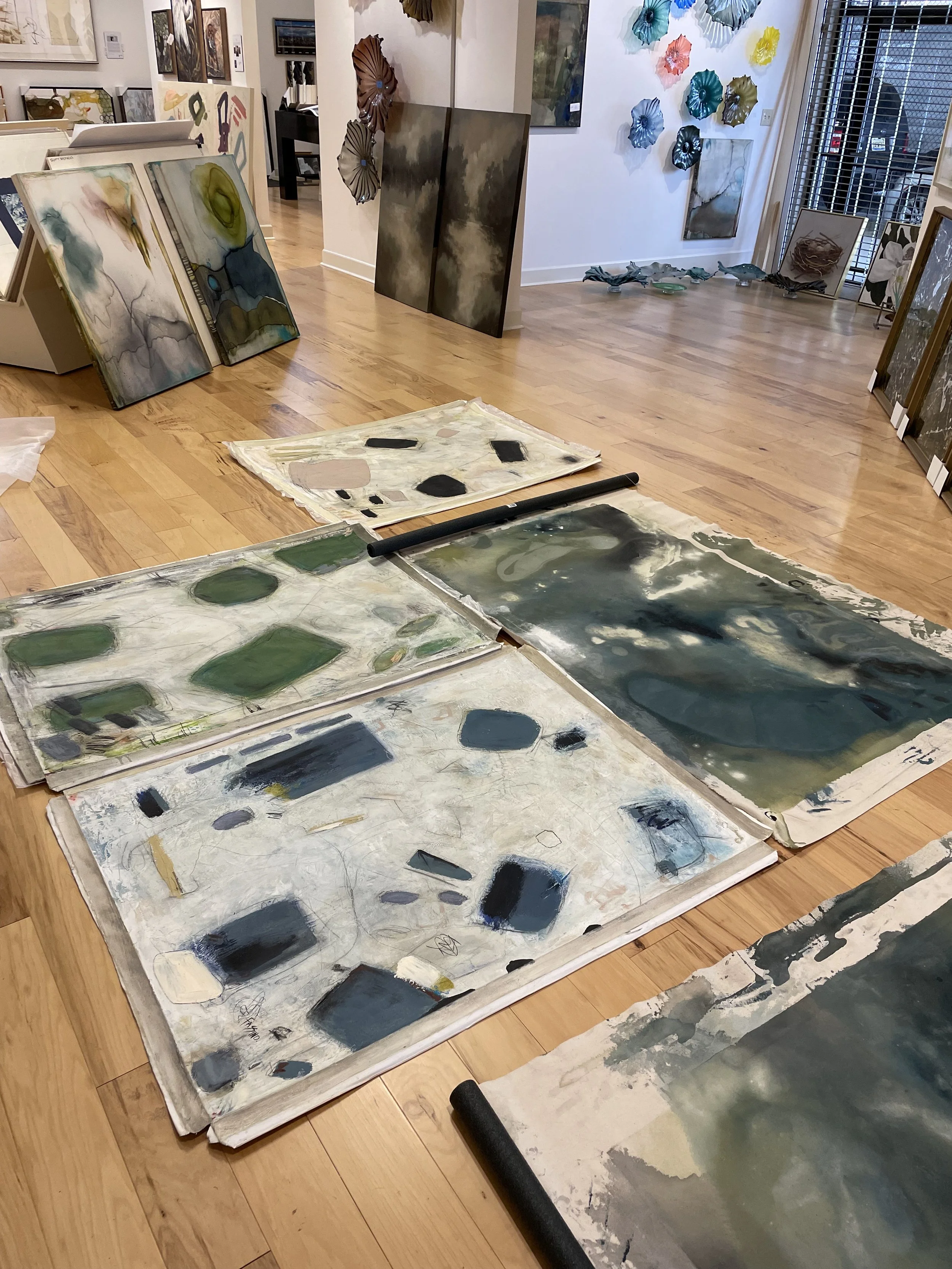
Then they clean! And the furniture arrives! And here’s the art! A new space for humans exists in the world, and I got to help.
I’d like to be known for my competence and my kindness, for a level-headedness that brings calm to tricky situations, for taking every project just a little bit further than we expected it could go.
I often muse on how the process of shaping space has shaped me. There are parts of my personality that have been drawn out and suppressed by this career. Of course, this started with the Ego Death of design school. There’s nothing quite like submitting to a process where this is no praise untouched by critique. It’s good training, as this is a hard career for a normal person who desires affirmation from the people you admire and report to.
As a student, a professor told me I shouldn’t plan to work in the South: he said my Midwestern frankness was off-putting and clients wouldn’t like me. I’ve now spent almost an entire decade working in the South, and that hasn’t been the case, but I’ve certainly done some personality fine-tuning.
It’s not possible to tease out how much of these effects are my career specifically versus the region I live in, the natural process of unfurling into adulthood, and the specific firms I’ve chosen to work for. I realize it’s all of the above. But I also know that spending years standing in front of skeptical clients trying to convince them of my design vision has honed my skills of persuasion and the flexibility of my thinking. Over a decade of having my ideas rejected — some of them ones I was quite proud of and attached to — has removed my defensiveness and taught me that I can always find a different solution.
I’m not a social person by nature, but this work has me bumping up against all types of people. I’ve learned how to dial personality traits up and down depending on the room I’m in: lawyers most appreciate my straightforwardness; engineers don’t want to be convinced of anything; financial services folks prefer a very light touch, like I was barely there; contractors want to know we’re on the same team and that I appreciate their expertise; everyone requires significant evidence of competence before they’ll trust a designer.
Ultimately, I’d like to be known for that competence as well as a level-headedness that brings calm to tricky situations and for taking every project just a little bit further than we expected it could go. I want to leave behind me a trail of clients who end the project feeling like they were heard and that my skill took their vision somewhere special. I want to be respected by my contractors and engineers, because their partnership makes my vision possible.
So yes, I’d like to do this for another 10 years and another 10 after that. (And another 10 after that, probably.)
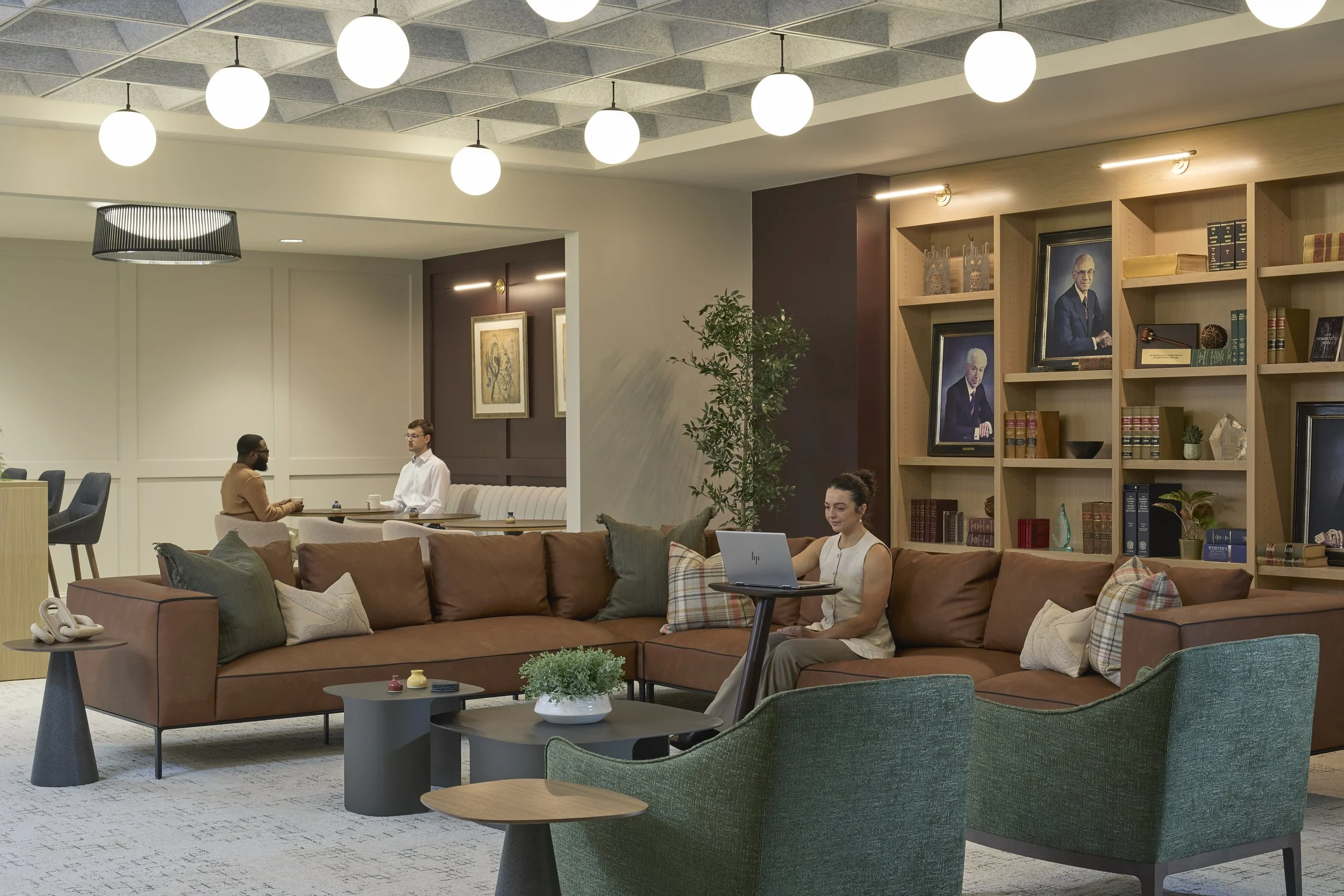
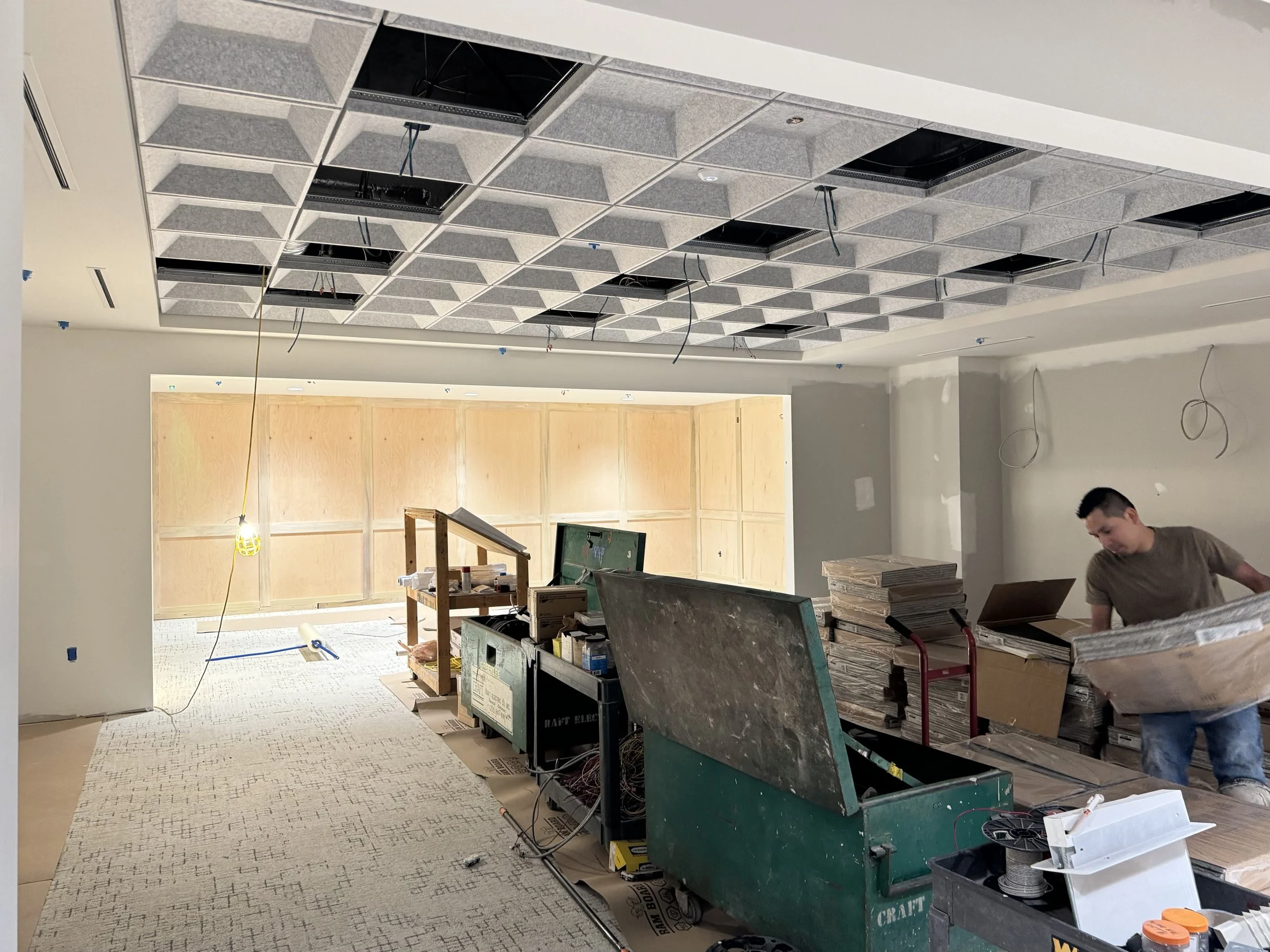
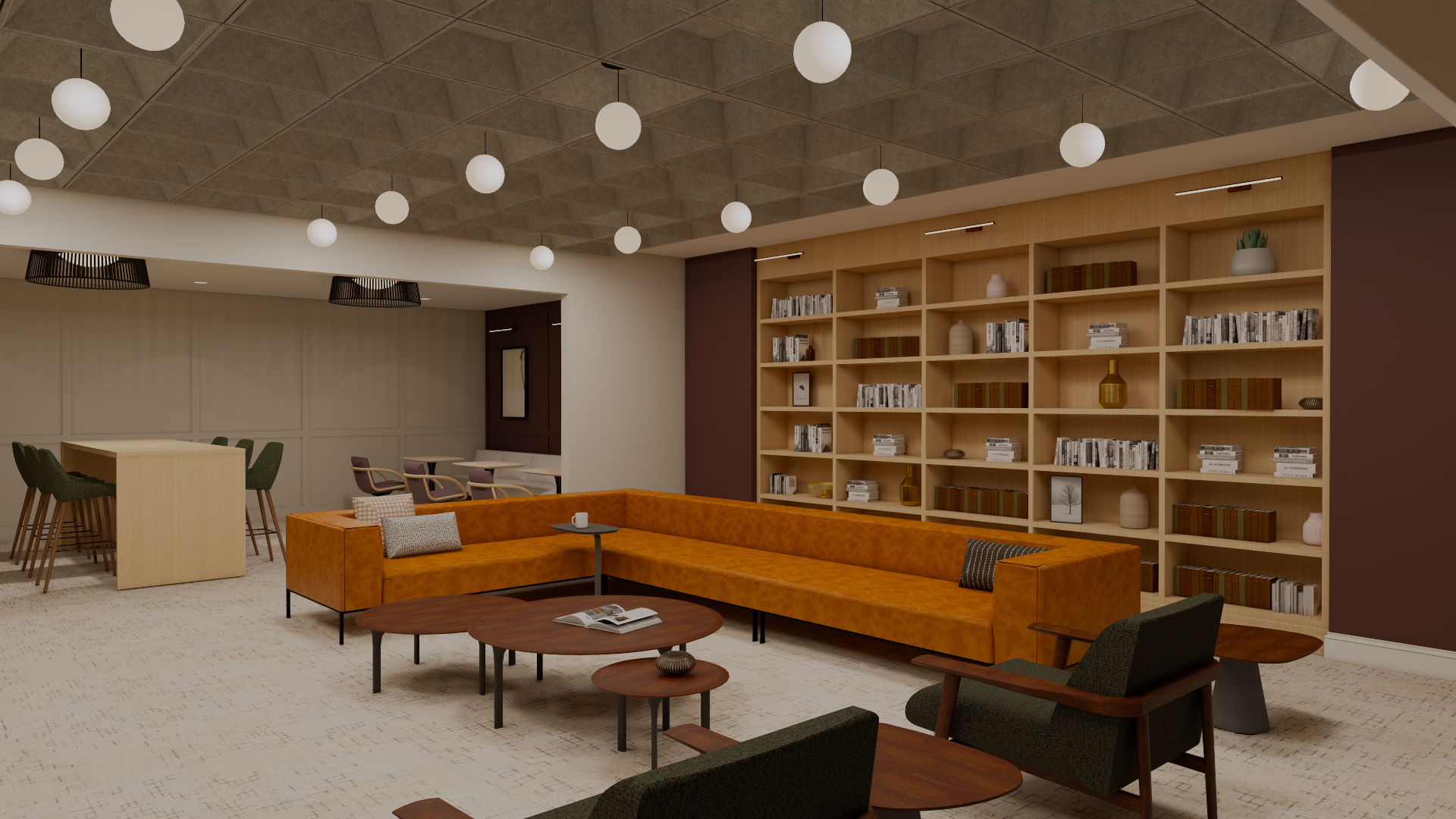
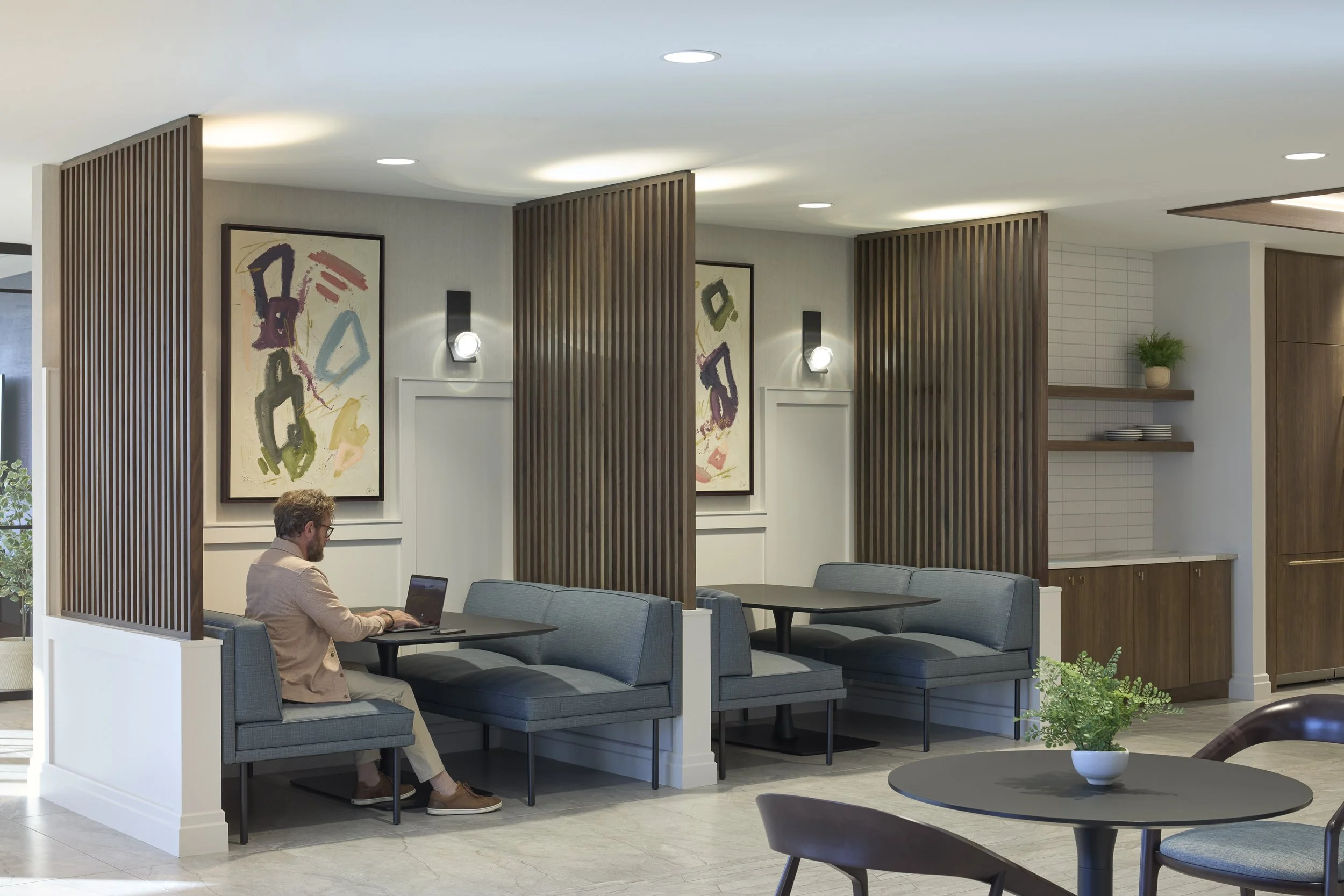
Featured projects: Baker Donelson and Dentons Sirote, completed for KPS Group
Project photography by Chris Luker, courtesy of KPS Group
Construction progress photos by Alyssa Hakanson
Renderings were created by our design teams — neither of these projects was my solo effort, but I was lead interior designer! KPS Group provided interior architectural services and furniture design for both projects and art selection for Baker Donelson.
I remain grateful for the opportunities and proud of our team’s work.
